Showing posts with label xhosa bling.. Show all posts

Wednesday, 17 July 2019

Traditional accessories.


Traditional fabric iBayi.
Beaded in the traditional Xhosa colours of white, black, blue and red.
Traditionally this is so that when a woman breastfeeds.

       Accessories form as an extension of self, the value of art in an individual rather than itself as an object isolated from its social context. this allows the Xhosa people to connect with each other,like man carrying their small bags made out of ibayi, a traditional fabric that is 100% cotton around other man, which their put their pipes and tobacco in, and woman smoking pipes together with their long pipes, to prevent smoke inhalation to their children.
the culture is the catalyst for aesthetic experiences, the identification of self in the self awareness of the self. accessories become us.


Xhosa artwork.


Xhosa bead work, like all African art, is steeped in symbolism and meaning. ... Historically, bead work played an important role in providing people with a sense of belonging and a cultural identity. It helped to provide a solid traditional base on which they could base their ethics, morals and ways of living.


     The Wild Coast Trading Company.

     Sources beautifully handmade products including jewellery, natural beauty products, traditional Xhosa clothing, wire craft, home decor and pottery directly from crafters and artists that are mostly based in the Wild Coast area of the Eastern Cape, South Africa. 

Mbali creations are making the traditional Xhosa clothing and jewellery, in this slide I have attached pictures of the Xhosa traditional jewellery she makes. Her Xhosa traditional jewellery is focused on the traditional accessories that are the main fashion of the Xhosa people, because the Amaxhosa has many clans, they have the same traditional accessories but they defer in design and the colours clans use. See figure “idayimani and figure “Mfengu, they are both headbands, from different clans.

Most of her work is made out of the traditional Xhosa colours which are white, blue, black and red. For business purposes and artwork she also can make the same traditional jewellery in other colours to accommodate her clients. 


Each piece of her work plays an important role in communicating the meaning i intend to covey with Xhosa bling. 

Thursday, 11 July 2019

Xhosa social and cultural issues influencing contemporary jewellery.

chapter 2, slide 6.


Social artistry..
  • is the attempt to address or recognize a particular social issue using art and creativity. 
  • to improve society as a whole and to help other people find their own means of creative expression.


Characteristics of Bridal Jewelry Collection.

Here is a list of the basic features of the bridal jewelry collection:

  • The symbol of rich culture with a traditional value attached to it.
  • Exquisite look to give a divine appearance to the bride on the occasion.
  • Uniqueness brought out with the modern touch to make it a valuable gift.

Xhosa social and cultural issues influencing contemporary jewellery.

chapter 2, slide 5.

"Got my trap jumpin and my diamonds jumpin got some niggas with me who wanna kill somethin"
Carrying on the traditions of hip hop chains not only makes you look good, but you feel good too. Anyone who is looking to represent their causes can do it with chains that bling. People all around the world can match up pendants with their hip hop bling chains to show everyone who they are - whether that be a person who is Christian, from an island or believes in peace, the statement will be made with the bling bling chains.
Custom Gold & Diamond Memorial Picture Pendant.
Having bling bling necklace chains isn't only about having a shiny piece of urban hip hop jewelry, but you get to represent what you stand for. With all of the pendants available for bling bling chains, you will be able to find all different types of designs. You may see many important people in the hip hop industry rockin' bling bling chains that have their country's flag or religious icons. Bling bling chains go beyond just hip hop music, it allows individuals to express themselves. There are even some places that allow you to customize your bling bling chains with custom designed pendants.

Xhosa social and cultural issues influencing contemporary jewellery.

chapter 2, slide 4.


MAXHOSA BY LADUMA is a South African knitwear brand founded in 2012 by Laduma Ngxokolo. This was with desire to explore knitwear design solutions that would be suitable for amakrwala (Xhosa initiates). His initial vision was to create a modern Xhosa-inspired knitwear collection that would be suitable for this market. As a person who has undergone the process, Laduma felt that he had to develop premium knitwear that celebrates traditional Xhosa aesthetics.

Xhosa social and cultural issues influencing contemporary jewellery.

chapter 2, slide 3.


A social status is an identification that influences a large number of individuals within a society. A social status has many categories in depth as well as light. It's a common problem and a solution we see happening in our society. Xhosa people identify themselves with symbols, colors and accessories. That allows individuality that connects people together. its the value of art in an awareness of self. More importantly the value of Xhosa bling in an individual than as the object isolated from its social context.


Xhosa social and cultural issues influencing contemporary jewellery.

chapter 2, slide 2.


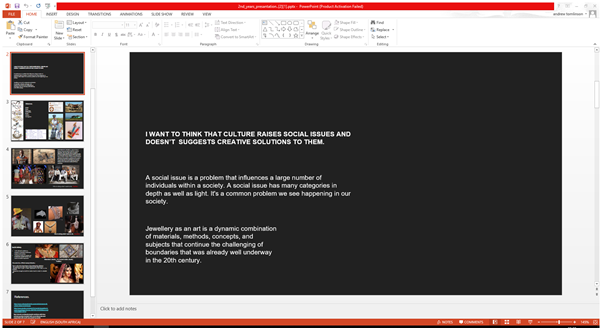
Jewellery as an art is a dynamic combination of materials, methods, concepts, and subjects that continue the challenging of boundaries that was already well underway in the 20th century.
I want to think that culture raises social issues and doesn’t suggests creative solutions to them.
According to Oyama Y. street culture is the catalyst for aesthetic experiences. I am looking at contemporary jewellery to reference the anthropology of a Xhosa man to create Xhosa bling. A Xhosa man identifies himself by his social culture. 

Thursday, 4 July 2019


Inkwenkwe.

Image result for inkwenkwe


  A young boy roles were to help his mother in the household by running errands. A young male child; a child who will grow up to be a man; a male child, or a male person in general. 
  •  Run boy for his mother.
  • To herd livestock. 
  • Finding birds nests is one of the activities a boy does while in the wild herding livestock. Finding a birds nest with eggs, marking it as your property and taking care of it is one of the things that develops a boy to a manhood.
Image result for birds nest
birds nest.


Thursday, 20 June 2019


Amachokoza.

I want myjewellery to be functional to address issues of materialism that are affecting the social, cultural values in the Xhosa societies. The purpose of the bling bling look is to coincide with the modern times. I want my jewellery to celebrate old fashioned rituals in a modern look.

Xhosa young couple.

Modern day face painting..
Amachokoza sexy and spontaneous glasses.


Monday, 17 June 2019

Amachokoza.(Dots) Plat Africa 19.

Umchokozo,

which is South African face paint for the Xhosa peopleFace painting, or umchokozo, plays a big role in Xhosa culture, and women decorate their faces with white or yellow ochre, and use dots to make patterns on their faces. The decorations are sometimes painted over their eyebrows, the bridge of their noses, and cheeks.

designed Amachokoza glasses.


a styled look design Amachokoza glasses,

Thursday, 6 June 2019

Xhosa Bling.

using the anthropology of a Xhosa man to produce contemporary jewellery.

My research methodology is:
  1. i will be looking at a milestone of a xhosa man.
  2. find the worth of the milestone.
  3. find the purpose of the milestone.
  4. then Aspect at ceremony that goes with the milestone.
The Plan is: Manufacturing pieces of jewellery that are an indicator of status based on the milestones a Xhosa man has to go through to fulfill his manhood. i would like these indicators of status to always be a reminder to an individual of his status and the responsibility that comes with the status. 


1. 
2. what does the milestone mean to the development of a Xhosa man.
3. look at the responsibilities that come with the milestone.
4. look at the ceremony is merely looking at the way they wear the attire, the colors and the symbols. 

All the above mention points will be my design process blue print, I would like to create jewellery that in a sense has motivational aspects. responsibility seems to have notions of difficulty, but i would like to create pieces that can in a way lighten the sense of burden.

Wednesday, 5 June 2019

Material wealth being replaced by the invisible digital wealth..


Bitcoin means trusting with having to trust the bank.

A system outside the banking system.

Cash less society.

Possibility to free us or enslave us.

The trust is built in criptocracy.

Block chain. Removing the central party.

Bitcoin is programmable money.

Sitoshi bits of Bitcoins.

It takes 800 dollars to make one Bitcoin.

Bitcoin is the end of banks.

It is not an investment.

Fare and cheap paying system.

When there's a crisis people run to the bank and withdraw their money.

Cash is unreachable and easily transportable.

Asking a banker, do you like Bitcoin it's like asking the king if he likes democracy.

Just like telephone is disappearing, money will disappear.


Thursday, 23 May 2019


My plan:


I think manufacturing Xhosa bling contemporary jewellery will be a functioning plan. because I want it to “…squelch materialistic messages…”(Rindfleisch 2007, cited in Kline 2007) that are affecting the social, cultural values in the Xhosa societies, Particularly the young people, the purpose of the bling bling look is to coincide with the modern times, reason being the young people are born in unstructured societies and they are consumed by materialistic assets (Rindfleisch 2007). Xhosa bling contemporary jewellery has to be associated with visual scream, as that attracts attention. from that attention i can be able to convey the purpose of every piece of work that has to function as reminder (INDICATE) to the wearer what STAGE THEY ARE IN AND their lives and what roles in their SOCIAL AND CULTURAL community they need to be responsibly for. 

Jewelry posed different significance for different cultures, in my culture jewellery pieces are attached to specific and significant milestones of a xhosa man, their significance is to guide, construct and motivate a xhosa man to be a productive member of his society and culture. 

Now the plan is to manufacture pieces of jewellery that depict a stage and a role in a persons life, when i say "Omit to logic" i mean people always do need people and things that they depend on, either physically or emotionally. motivation is the most important aspect of a daily life. manufacturing pieces of jewellery that are always a reminder to an individual that they are their own entity and they co-exist among other human beings and their role is to find what drives us,what keep us going, im looking at words, colors and symbols that bring us self motivation. 

Grace ring: a constant reminder, Motivation to always be grateful of whatever or situation you are in everyday.


Earrings are a reminder that our actions and choices determines if we "laugh now and cry later or cry now and laugh later"


Silver and leather ring and earrings, Grace ring and two faced earrings.

Saturday, 27 April 2019


Heritage Expo career 2019.


The trip has reinforced my commitment to my b-tech research topic, in understanding that my research topic is not isolated. There other craftsman who are doing what I'm trying to do, This exposure helped me to turn my research topic into a mobile research classroom,       it was  very instrumental to collecting data, by answering questions about my work, it helped me to also quizz myself on many aspects of my craft work.


“as a jewellery designer I am a visual being and this trip allowed me to touch, feel, and listen to what other craft people are doing in regard with their craft work,[which has helped me gain a better understanding of their work topics, including the purpose of their cultural approach, this experience has guided me to an certain understanding and tolerance, and exposed me to the world outside my own.

Thursday, 25 April 2019


chapter 1

Xhosa.

The Xhosa is the people, who refer to themselves as Amaxhosa, they are of Nguni stock, now found mostly in the southern part of South Africa, particularly the eastern cape. they have a diversity of proud clans, the Pondo, Bomvana, Thembu, Gcaleka, Ngqika, Ndlambe and Dushane and the Xhosa tribe itself. 

The reason i chose the Xhosa people for my research report is because firstly i am a Xhosa man and secondly i think their story as the people needs to be told, as i have this belief that their social and cultural norms can construct a life of a man in having a deep sense of his community and be a productive member of his society. 

Bling.

Bling comes from the word bling bling which is a slang term popularized on hip hop culture, referring to flashy, ostentatious or elaborate jewellery, and ornamented accessories that are carried, worn or installed such as cellphones or tooth caps.

The reason for choosing bling bling is because it is deeply attached to hip hop culture as one of its elements and is used to signal the status of the wearer, hip hop is a culture and art movement but it has become a culture of materialism. Now it is known for its negative reputation. It is often thought as an entrance way into gangs, illegal drug activity, and malicious behavior. This is because hip-hop has moved away from what it was supposed to be used for. Hip hop culture has found its ways all over the world particularly on the Youth.

Now living in the world of materialism I want to attempt to bring the two cultures together, I am using Xhosa culture for the content of my research report and bling for the flashy, ostentatious look to elaborate the look of my contemporary jewellery. through seeing the effects of materialism in my community I deeply feel a sense of responsibility in manufacturing contemporary jewellery that is flashy with a narrative of the Xhosa social and cultural norms that will construct a Xhosa man. Therefore I will be using the anthropology of a Xhosa man to produce bling contemporary jewellery.

from a boy to a man there are roles that a Xhosa man is responsible for. i am particularly looking at the adornments worn which i believe were distinctively able to distinguish and signal the status of the wearer and those that were worn at celebrations of particular social and cultural events of milestones.

The milestones.

Izibulo: The first born child of a married couple, either a boy or a girl.
Inkulu: Is the first born boy child, the inheritor, even if born after girls.
Inkwenkwe: a boy. looking after livestock, play with clay oxen, stick fighting.
umkhwetha: initiate, time of getting adult teachings, learns respect, and ways to honor ancestors.
Ikrwala: home coming,small unimportant man, wears red ocher.
Umfana: a worrier.
Unomgcana: married man.

Jewellery indicating the status. 


The word jewelry is derived from Latin word jocale, means plaything. But it is the most ancient form of body ornamentation. In ancient times, jewelry was used to be made from bone, animal teeth, shells, wood, carved stones, etc. A specific piece was made for each part of the body. Apart from functional use, jewelry was a symbol of wealth, status and membership. It had been used to move wedding dowries, to keep large amount of wealth or to just for artistic display.
 https://www.streetdirectory.com/travel_guide/author/details/Roberto+Sedycias/

I think my  Xhosa bling contemporary jewellery is functional because I want it to “…squelch materialistic messages…” (Rindfleisch 2007, cited in Kline 2007) that are affecting the social, cultural values in the Xhosa societies, Particularly the young people, the purpose of the bling bling look is to coincide with the modern times, reason being you cant censor the young and they are consumed by materialistic assets (Rindfleisch 2007). Xhosa bling contemporary jewellery has to be associated with visual scream, as that attracts attention. from that attention i can be able to convey the purpose of every piece of work that has to function as reminder (INDICATE) to the wearer what STAGE THEY ARE IN AND their roles in their SOCIAL AND CULTURAL community.

generate key words that will help me find people making jewellery as indicator of status for chapter 2.


7 milestone indicating the social and cultural status of a xhosa man.

leading me to find people who are doing something similar to what i want to do.

what does Bruce, den say about indicator of status


Thursday, 18 April 2019


Start with your own proposal - get some clarity

Have a look at the proposal form that is used by our Faculty, for the Masters. I would like you to fill in 1, 2, 3 and 4 in Section B. Give it a shot and let's discuss what you come up with. There has to be something to discuss next week.
first attempt.


Section B: To be typed in Arial 10-point font in single line spacing (expand sections to fit contents, but keep within the specified maximum lengths.)
1.  Field of Research and Provisional Title

An investigation into the anthropology of a xhosa man, hold proper interviews with the elders that knows the milestones that construct a xhosa man, to design and develop xhosa bling contemporary jewellery.

2.  Context of the Research

The aim of this study is to document traditional and cultural activities that specifically were designed to construct roles of a xhosa man in his society, in order to apply these milestones in the production of xhosa bling contemporary jewellery.

 According to (Thorin Klosowski 2013, Materialism is one of those ugly words that gets thrown around a lot. It's best defined as an insatiable desire to own things and the belief that when those desires are fulfilled we'll achieve happiness. Basically, materialism suggests a yardstick for success: the more you own, the better your life will be. It sounds horrible, but we all do it to some extent, even if we don't go overboard.

Milestones of a xhosa man have traditionally been used to construct the xhosa man in understanding his gender roles in his community. These milestones have been passed on from person to person, orally, and in action with the result that there is little documented evidence. According to                


I have been exposed to traditional and cultural activities since childhood and will also rely on these memories of my cultural heritage for this research. I am working on the milestones that make a xhosa man in the production of my jewellery (see figures 1, 2, 3 and 4). I exhibited my work at the heritage Expo in johannesburg constitutional hill 2019,

I am a qualified goldsmith and spent 10 years in the jewellery industry where I produced commercial jewellery that was purely concerned with addressing consumer needs. I am currently developing my own style and personal approach by concentrating on producing xhosa bling jewellery. I now identify with, and have begun to align my practice with bruce metcalf view of jewellery, as a form of functionality and individual expression. I want to use my practice to demonstrate and preserve my identity and cultural heritage.

Xhosa bling contemporary jewellery, for the purpose of this research is understood to mean jewellery that “allows for variation and invention” (Metcalf 1989) and is not mass produced or available in chain outlets (Derez 2005).

3.  Research Problem and Aims

The aim of this study is firstly, to investigate selected the milestones that construct a xhosa man, in order to document and disseminate the process as part of preserving traditional knowledge; and secondly to apply the findings in the design and manufacture of a range of contemporary jewellery. Although I will rely on previous research, I intend to interview elders in order to generate primary data for my research.

It is important to document these milestones as they are in danger of becoming extinct due to materialism. In the history of the development of paradigmatic attempts to solve the question of socio cultural causality, cultural materialism has confronted and continues to confront a set of long-established, common-sense but erroneous and unproductive beliefs about human culture that are similar to those which confronted and continue to confront the development of radical behaviorism. Behaviorists have had to struggle against the belief that organisms, especially humans, possess faculties called mind and will whose exercise makes their behavior largely unpredictable (Marvin Harris 2007) According to Metcalf (1989): “tradition should be preserved because it allows for variation and invention”.

The milestones I will refer to in this study, are traditional practices of gender roles, such as the teachings of manhood. I intend to interview elders situated in Idutywa, centane, Engcobo, who are still practising traditional and cultural ways. That goes back almost 1000 years”


Key questions:

How can I use a range of Xhosa bling contemporary jewellery to preserve the anthropology of a Xhosa man as a reference?

  • How are the milestones roles contributed to a xhosa man in his community?
  • How can i use my xhosa bling contemporary jewellery to address social and cultural issues affected by materialism?
  • Which aspects of the milestones are most suitable for producing xhosa bling contemporary jewellery?


4. Literature Review
My focus will be on milestones of a xhosa man. I currently know 7 milestones; (Izibulo, Inkulu, inkwewnkwe, Umkhwetha, Ikwala, Umfana, unomgcana which I learned from my childhood, these are the critical stages that were practised to construct a xhosa man that was productive to his society.


Section B: To be typed in Arial 10-point font in single line spacing (expand sections to fit contents, but keep within the specified maximum lengths.)
1.  Field of Research and Provisional Title

An investigation into the anthropology of a xhosa man, hold proper interviews with the elders that knows the milestones that construct a xhosa man, to design and develop xhosa bling contemporary jewellery.

2.  Context of the Research

The aim of this study is to document traditional and cultural activities that specifically were designed to construct roles of a xhosa man in his society, in order to apply these milestones in the production of xhosa bling contemporary jewellery.

 According to (Thorin Klosowski 2013, Materialism is one of those ugly words that gets thrown around a lot. It's best defined as an insatiable desire to own things and the belief that when those desires are fulfilled we'll achieve happiness. Basically, materialism suggests a yardstick for success: the more you own, the better your life will be. It sounds horrible, but we all do it to some extent, even if we don't go overboard.

Milestones of a xhosa man have traditionally been used to construct the xhosa man in understanding his gender roles in his community. These milestones have been passed on from person to person, orally, and in action with the result that there is little documented evidence. According to                


I have been exposed to traditional and cultural activities since childhood and will also rely on these memories of my cultural heritage for this research. I am working on the milestones that make a xhosa man in the production of my jewellery (see figures 1, 2, 3 and 4). I exhibited my work at the heritage Expo in johannesburg constitutional hill 2019,

I am a qualified goldsmith and spent 10 years in the jewellery industry where I produced commercial jewellery that was purely concerned with addressing consumer needs. I am currently developing my own style and personal approach by concentrating on producing xhosa bling jewellery. I now identify with, and have begun to align my practice with bruce metcalf view of jewellery, as a form of functionality and individual expression. I want to use my practice to demonstrate and preserve my identity and cultural heritage.

Xhosa bling contemporary jewellery, for the purpose of this research is understood to mean jewellery that “allows for variation and invention” (Metcalf 1989) and is not mass produced or available in chain outlets (Derez 2005).

3.  Research Problem and Aims

The aim of this study is to explore and gain insight into the use of milestones of the anthropology of a Xhosa man, to create Xhosa bling contemporary jewellery. A social and cultural overview will be done in contextualizing the use of these milestones in the anthropology of Xhosa man. 7 milestones will be investigated in order to understand fully their purpose in motivating the anthropology of a Xhosa man. it is my intention to enrich my understanding of the subject and develop a more all-inclusive approach to my work through this study. it will be through this study that i will be able to explore ideas and concepts that will support the narratives of the milestones through the Xhosa bling contemporary jewellery.


Key questions:

How can I use a range of Xhosa bling contemporary jewellery to preserve the anthropology of a Xhosa man as a reference?

  • what are the historical context for the use of milestones in the anthropology of a Xhosa man?
  • why and how the Xhosa people invented these milestones of an anthropology of a Xhosa man?
  • how and why i will use these milestones in exploring ideas and concepts for the creation of Xhosa bling contemporary jewellery?


4. Literature Review
My focus will be on milestones of a xhosa man. I currently know 7 milestones; (Izibulo, Inkulu, inkwewnkwe, Umkhwetha, Ikwala, Umfana, unomgcana which I learned from my childhood, these are the critical stages that were practiced to construct a xhosa man that was productive to his society.