Showing posts with label indicator of status. Show all posts

Wednesday, 17 July 2019

Traditional accessories.


Traditional fabric iBayi.
Beaded in the traditional Xhosa colours of white, black, blue and red.
Traditionally this is so that when a woman breastfeeds.

       Accessories form as an extension of self, the value of art in an individual rather than itself as an object isolated from its social context. this allows the Xhosa people to connect with each other,like man carrying their small bags made out of ibayi, a traditional fabric that is 100% cotton around other man, which their put their pipes and tobacco in, and woman smoking pipes together with their long pipes, to prevent smoke inhalation to their children.
the culture is the catalyst for aesthetic experiences, the identification of self in the self awareness of the self. accessories become us.


Xhosa artwork.


Xhosa bead work, like all African art, is steeped in symbolism and meaning. ... Historically, bead work played an important role in providing people with a sense of belonging and a cultural identity. It helped to provide a solid traditional base on which they could base their ethics, morals and ways of living.


●     The Wild Coast Trading Company.

●     Sources beautifully handmade products including jewellery, natural beauty products, traditional Xhosa clothing, wire craft, home decor and pottery directly from crafters and artists that are mostly based in the Wild Coast area of the Eastern Cape, South Africa. 

Mbali creations are making the traditional Xhosa clothing and jewellery, in this slide I have attached pictures of the Xhosa traditional jewellery she makes. Her Xhosa traditional jewellery is focused on the traditional accessories that are the main fashion of the Xhosa people, because the Amaxhosa has many clans, they have the same traditional accessories but they defer in design and the colours clans use. See figure “idayimani and figure “Mfengu, they are both headbands, from different clans.

Most of her work is made out of the traditional Xhosa colours which are white, blue, black and red. For business purposes and artwork she also can make the same traditional jewellery in other colours to accommodate her clients. 


Each piece of her work plays an important role in communicating the meaning i intend to covey with Xhosa bling. 

Thursday, 11 July 2019

Xhosa social and cultural issues influencing contemporary jewellery.

chapter 2, slide 6.


Social artistry..
  • is the attempt to address or recognize a particular social issue using art and creativity. 
  • to improve society as a whole and to help other people find their own means of creative expression.


Characteristics of Bridal Jewelry Collection.

Here is a list of the basic features of the bridal jewelry collection:

  • The symbol of rich culture with a traditional value attached to it.
  • Exquisite look to give a divine appearance to the bride on the occasion.
  • Uniqueness brought out with the modern touch to make it a valuable gift.

Xhosa social and cultural issues influencing contemporary jewellery.

chapter 2, slide 5.

"Got my trap jumpin and my diamonds jumpin got some niggas with me who wanna kill somethin"
Carrying on the traditions of hip hop chains not only makes you look good, but you feel good too. Anyone who is looking to represent their causes can do it with chains that bling. People all around the world can match up pendants with their hip hop bling chains to show everyone who they are - whether that be a person who is Christian, from an island or believes in peace, the statement will be made with the bling bling chains.
Custom Gold & Diamond Memorial Picture Pendant.
Having bling bling necklace chains isn't only about having a shiny piece of urban hip hop jewelry, but you get to represent what you stand for. With all of the pendants available for bling bling chains, you will be able to find all different types of designs. You may see many important people in the hip hop industry rockin' bling bling chains that have their country's flag or religious icons. Bling bling chains go beyond just hip hop music, it allows individuals to express themselves. There are even some places that allow you to customize your bling bling chains with custom designed pendants.

Xhosa social and cultural issues influencing contemporary jewellery.

chapter 2, slide 4.


MAXHOSA BY LADUMA is a South African knitwear brand founded in 2012 by Laduma Ngxokolo. This was with desire to explore knitwear design solutions that would be suitable for amakrwala (Xhosa initiates). His initial vision was to create a modern Xhosa-inspired knitwear collection that would be suitable for this market. As a person who has undergone the process, Laduma felt that he had to develop premium knitwear that celebrates traditional Xhosa aesthetics.

Xhosa social and cultural issues influencing contemporary jewellery.

chapter 2, slide 3.


A social status is an identification that influences a large number of individuals within a society. A social status has many categories in depth as well as light. It's a common problem and a solution we see happening in our society. Xhosa people identify themselves with symbols, colors and accessories. That allows individuality that connects people together. its the value of art in an awareness of self. More importantly the value of Xhosa bling in an individual than as the object isolated from its social context.


Xhosa social and cultural issues influencing contemporary jewellery.

chapter 2, slide 2.


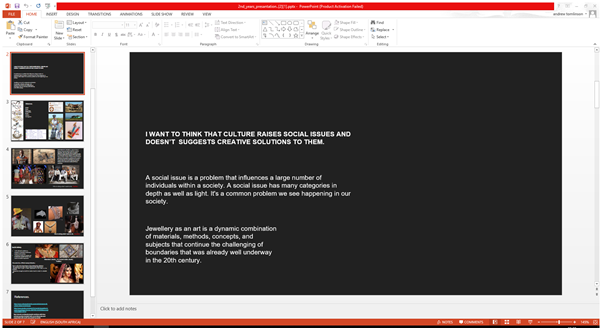
Jewellery as an art is a dynamic combination of materials, methods, concepts, and subjects that continue the challenging of boundaries that was already well underway in the 20th century.
I want to think that culture raises social issues and doesn’t suggests creative solutions to them.
According to Oyama Y. street culture is the catalyst for aesthetic experiences. I am looking at contemporary jewellery to reference the anthropology of a Xhosa man to create Xhosa bling. A Xhosa man identifies himself by his social culture. 

Thursday, 4 July 2019


Inkwenkwe.

Image result for inkwenkwe


  A young boy roles were to help his mother in the household by running errands. A young male child; a child who will grow up to be a man; a male child, or a male person in general. 
  •  Run boy for his mother.
  • To herd livestock. 
  • Finding birds nests is one of the activities a boy does while in the wild herding livestock. Finding a birds nest with eggs, marking it as your property and taking care of it is one of the things that develops a boy to a manhood.
Image result for birds nest
birds nest.


Monday, 17 June 2019

Amachokoza.(Dots) Plat Africa 19.

Umchokozo,

which is South African face paint for the Xhosa people. Face painting, or umchokozo, plays a big role in Xhosa culture, and women decorate their faces with white or yellow ochre, and use dots to make patterns on their faces. The decorations are sometimes painted over their eyebrows, the bridge of their noses, and cheeks.

designed Amachokoza glasses.


a styled look design Amachokoza glasses,

Thursday, 30 May 2019

  • Milestone "ikrwala": 

In traditional Xhosa society: a newly circumcised youth. A graduate of an initiation school.

Amaxhosa are a diversity of proud clans and these clans differ in their ways of practicing culture and customs. 

A graduate marched back from initiation school to their parental homes, the young men went indoors where girls of their own age helped them to smear themselves from top to bottom with a mixture of oil and red ochre. Every day, for the following year, the boy had to refresh his red ochre. He also had to walk slowly to demonstrate his humility and to signify that he was still a “small’, unimportant man.
Milestone: Irwala.

Cultural and community roles of ikrwala:

Cooking and washing up is done by these young men, and these young men are served with a dish separate from that of the senior men. Different ones from the elderly men take turns in lecturing to these young men, Gifts..are given by relatives and friends to enable them to set out in their new way of life. these roles were also used as an indicator of status, as Xhosa man had roles in their culture and communities.


Milestone:Ikrwala.

The different ways in which clothes and other accessories were worn signaled the status of the wearer and the clan he comes from, you can make a distinct differentiation in the way they dress, the smearing of the red ochre and the period they had to be ikrwala. The intensity of the color varying from clan to clan. you can see a mpondo ikrwala by his check hat and all cucky attire, a blazer and a shirt, and the intensity smearing of the red ochre, on that milestone for a year,refer to figure 1.
figure 1. Mpondo ikrwala..

you can see a Xhosa ikrwala, he throws a long scarf over one shoulder, which also serves as a cloak when it gets cold, he wears a suite, colour of his choice and he doesn't smear the red ochre, on that milestone for a period of 6 months, refer to figure 2. 

mohair-i, South Africa. Visi Magazine
figure 2. Xhosa ikrwala.

today you see amakrwala wearing designer jerseys with a similar design of the mpodo headdress, and they also smear ochre that is not intense as that of the mpondo. being on that milestone for as long as they feel like, refer to figure 3. This a new look of an ikrwala.


Related image
figure 3. new style. mordern  ikrwala look.


Xhosa social and cultural issues and pressures.


This is a video of Siviwe Ndongeni from EASTLONDON in his up coming tv show talking about social issues and male pressures that man go through.
https://www.facebook.com/LegendaryAgency/videos/885513425174462/
My plan: 

Perfect object motivation.

Finding the perfect motivation from a perfect object. making a perfect object that symbolizes motivation for a perfect self motivated life.

the grand idea of my B-tech research report is to find a way to motivate the youth in believing in themselves than believe and depend on material things.
Grace pierced ring.
Question mark earrings and a Grace ring.
Motivational sentimental rings.

Tuesday, 28 May 2019


  • Milestone "ikrwala": 
In traditional Xhosa society: a newly circumcised youth. A graduate of an initiation school.

Amaxhosa are a diversity of proud clans and these clans differ in their ways of practicing culture and customs. 
A graduate marched back from initiation school to their parental homes, the young men went indoors where girls of their own age helped them to smear themselves from top to bottom with a mixture of oil and red ochre. Every day, for the following year, the boy had to refresh his red ochre. He also had to walk slowly to demonstrate his humility and to signify that he was still a “small’, unimportant man. 

The different ways in which clothes and other accessories were worn signaled the status of the wearer and the clan he comes from, you can make a distinct differentiation in the way they dress, the smearing of the red ochre and the period they had to be ikrwala. The intensity of the color varying from clan to clan. you can see a mpondo new initiate by his dress code, and the intensity of the red ochre,including being on that milestone for a year,refer to figure 1. And you can also see the Xhosa new initiate, he throws a long scarf over one shoulder, which also serves as a cloak when it gets cold and he doesn't smear the red ochre, being on that milestone for a period of 6 months, refer to figure 2. today you see amakrwala wearing designer jerseys with a similar design of the mpodo headdress, and they also smear ochre that is not intense as that of the mpondo. being on that milestone for as long as they feel like, refer to figure 3. This a new look of an ikrwala.

Cultural and community roles of ikrwala:
Cooking and washing up is done by these young men, and these young men are served with a dish separate from that of the senior men. Different ones from the elderly men take turns in lecturing to these young men, Gifts..are given by relatives and friends to enable them to set out in their new way of life. these roles were also used as an indicator of status, as Xhosa man had roles in their culture and communities.


figure 1. Mpondo graduate.
mohair-i, South Africa. Visi Magazine
figure 2. Xhosa graduate.
  
Related image
figure 3. new style. mordern look.


Thursday, 23 May 2019

My plan:

My research methodology is:

  1. i look at a milestone of a xhosa man.
  2. find the story of the milestone.
  3. find the significance of the milestone.
  4. find the purpose of the milestone.
  5. the process of the milestone.
  6. the ceremony that goes with the milestone.
The Plan is: manufacturing pieces of jewellery that are always a reminder to an individual that they are their own entity and they co-exist among other human beings and their role is to find what drives us and what keep us going, in my culture jewellery pieces are attached to specific and significant milestones of a xhosa man, their significance is to guide, construct and motivate a xhosa man to be a productive member of his society and culture. im looking at words, colors (WHERE) and symbols that bring us self motivation.

From that i look at the symbols and colors that i find  that were worn in those ceremonies. symbols and colors played a symbolic significance in depicting hidden messages. 


My plan:


I think manufacturing Xhosa bling contemporary jewellery will be a functioning plan. because I want it to “…squelch materialistic messages…”(Rindfleisch 2007, cited in Kline 2007) that are affecting the social, cultural values in the Xhosa societies, Particularly the young people, the purpose of the bling bling look is to coincide with the modern times, reason being the young people are born in unstructured societies and they are consumed by materialistic assets (Rindfleisch 2007). Xhosa bling contemporary jewellery has to be associated with visual scream, as that attracts attention. from that attention i can be able to convey the purpose of every piece of work that has to function as reminder (INDICATE) to the wearer what STAGE THEY ARE IN AND their lives and what roles in their SOCIAL AND CULTURAL community they need to be responsibly for. 

Jewelry posed different significance for different cultures, in my culture jewellery pieces are attached to specific and significant milestones of a xhosa man, their significance is to guide, construct and motivate a xhosa man to be a productive member of his society and culture. 

Now the plan is to manufacture pieces of jewellery that depict a stage and a role in a persons life, when i say "Omit to logic" i mean people always do need people and things that they depend on, either physically or emotionally. motivation is the most important aspect of a daily life. manufacturing pieces of jewellery that are always a reminder to an individual that they are their own entity and they co-exist among other human beings and their role is to find what drives us,what keep us going, im looking at words, colors and symbols that bring us self motivation. 

Grace ring: a constant reminder, Motivation to always be grateful of whatever or situation you are in everyday.


Earrings are a reminder that our actions and choices determines if we "laugh now and cry later or cry now and laugh later"


Silver and leather ring and earrings, Grace ring and two faced earrings.

Tuesday, 14 May 2019

Amachokoza.(Dots) Plat Africa 19.

Umchokozo,

which is South African face paint for the Xhosa people. Face painting, or umchokozo, plays a big role in Xhosa culture, and women decorate their faces with white or yellow ochre, and use dots to make patterns on their faces. The decorations are sometimes painted over their eyebrows, the bridge of their noses, and cheeks.

Umtshakazi. a new wife.
Effortless Xhosa Bride And Groom - South African Wedding Blog
South African Wedding Blog for couples looking to incorporate culture into their weddings| A Stunning Xhosa Bride for a Proper Xhosa Wedding


Related image
Environmentally unfriendly: A selection of models charged down the runway in masks and headpieces that looked remarkably like sheets of plastic blowing against their faces
Image result for xhosa woman face decorations 

Givenchy Spring-Summer 2016, Womenswear - Catwalks (#22597)

"After she did her eyes, Susie Chapstick created a new make up diagram for the rest of her face."

Monday, 29 April 2019


jewellery as an indicator of status.


The aim of this study is to explore and gain insight into the use of milestones of the anthropology of a Xhosa man, to create Xhosa bling contemporary jewellery. A social and cultural overview will be done in contextualizing the use of these milestones in the anthropology of Xhosa man. 7 milestones will be investigated in order to understand fully their purpose in motivating the anthropology of a Xhosa man. it is my intention to enrich my understanding of the subject and develop a more all-inclusive approach to my work through this study. it will be through this study that i will be able to explore ideas and concepts that will support the narratives of the milestones through the Xhosa bling contemporary jewellery.

Key questions:

How can I use a range of Xhosa bling contemporary jewellery to preserve the anthropology of a Xhosa man as a reference?
  • what are the historical context for the use of milestones in the anthropology of a Xhosa man?
  • why and how the Xhosa people invented these milestones of an anthropology of a Xhosa man?
  • how and why i will use these milestones in exploring ideas and concepts for the creation of Xhosa bling contemporary jewellery?

Jewellery indicating status.

Jewelry posed different significance for different cultures. Like in Rome, people with certain ranks were allowed to wear rings. In other case, during 19th and 20th centuries, wearing of earrings by men was considered effeminate. According to recent culture, piercing of body and wearing rings there has become a symbol of courage, while other cultures are against it. Wearing of jewelry has got religious importance too. According to Hinduism, married women should wear necklace of golden and black beads, whereas in Islam, men should wear gold.

"Because contemporary jewellery is difficult, it is important that people are wearing jewellery. The wearer is the intermediary between the maker and the viewer. What troubles me though is the fact that most collectors of contemporary jewellery are grey haired and (almost) retired. Where are the young supporters of author jewellery? Most of the old ones started collecting during the waves of new jewellery in the sixties, seventies and eighties – at least this is the case in The Netherlands. I don’t have the impression that there is a new audience for author jewellery. If my idea is right, I think this will be one of the biggest problems of contemporary jewellery in future: connecting to younger people". https://klimt02.net/find/?Tags[]=LiesbethdenBesten

Otto Kunzli's works are based on complex reflection, conceptual and visual imagination. (Hufnagl 2010, Cited internationa Design meseum 2010) The result: objects with a clear, minimalist appearance, captivatingly crafted to perfection and highly visible - jewellery that adorns and at the same time possesses an autonomous aesthetic status of its own. 

7 milestone indicating the social and cultural status of a Xhosa man. 

A Xhosa mans life is a period of incredible growth in all areas of his development. Social and cultural development includes the manhood experience, expression and management of their social and cultural responsibilities in their community, and the ability to establish himself as indoda yamadoda.


The focus of my research report is on the role of milestones on the anthropology of a Xhosa man in his social and cultural development. Importantly, the roles of the indicators of his status played in his behaviour. Yet, given that cultures vary in its customs and beliefs and being affected by times, the same behaviour has been interrupted, now is likely that any behaviour that is viewed, within the culture, materialism, be as adaptive which has led to its encouragement by significant others including parents and peers; in contrast, if a behaviour is perceived to be cultural, it is discouraged. Moreover, the means by which the given behaviour is encouraged or discouraged may be culturally determined and defined.


Reffrence list.

Besten, L 2007. Liesbeth den Besten: answers to the interview Market, lies and websites Available: https://klimt02.net/forum/interviews/market-lies-and-websites-klimt02-versus-klimt02-part-1/(Accessed 29 April 2019)


Thursday, 7 March 2019

According to Bruce Metcalf.

On the nature of jewellery, paper by Bruce Metcalf.

On paragraph 13, Bruce Metcalf talks about traditional functions of jewellery, how jewellery serves as a redeemable investment and a portable bank account. It also shows that people today still use jewellery for the same reasons as the most primitive African tribesmen, where people wore a substantial portion of their wealth, of which today you can also convert it into goods and use it as a insurance policy.
The significance of the tradition of using jewellery for survival of the culture and the survival of woman's family in case of moving with times for the culture and in case of death of a husband for a woman, that symbolizes the fundamental purpose of the use of jewellery. Traditional jewellery has been used to create an association between the wearers status and his role in the culture for a specific purpose, the piece of jewellery has to fulfill a specific purpose or just as part of decorative purpose. Xhosa jewellery is mostly in large scale of Which it cannot be hidden and could  not be stolen as it was made for a person specifically.

                 Image result for xhosa man traditional wear